
Welcome toGeorge Bush Intercontinental Airport
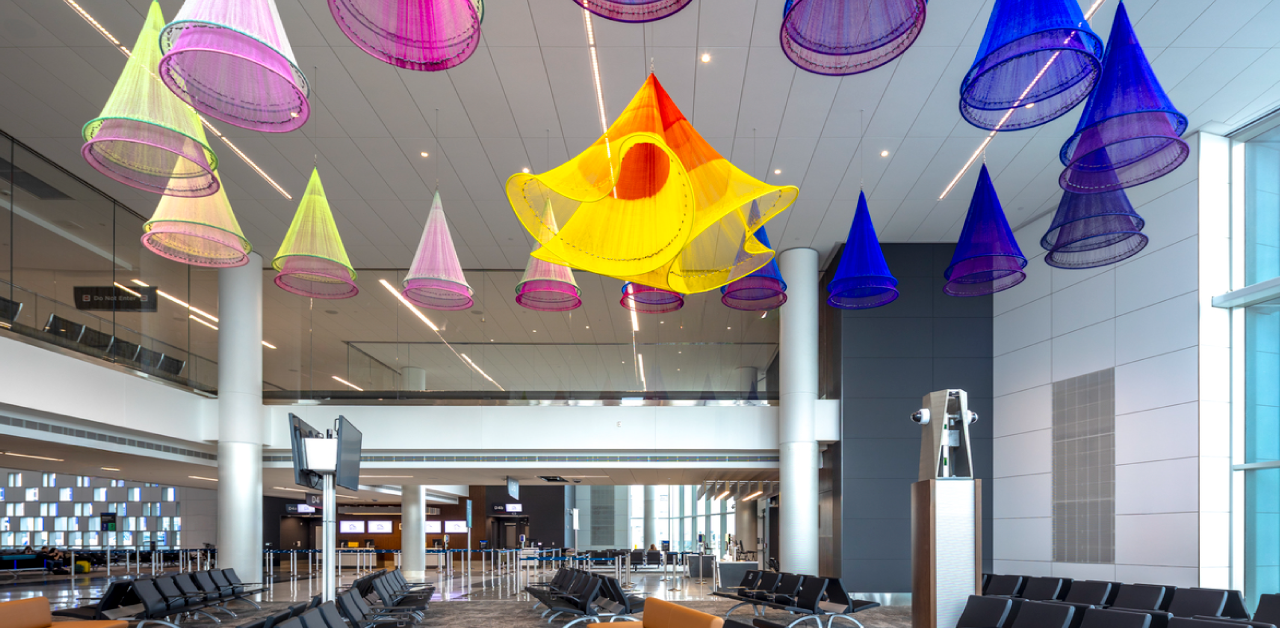
Check parking availability
Reserve your parking in advance and save up to 50%.Learn moreGet through security faster
Check security wait times to make sure you will get through security with ease!Security Wait TimesPlan your ride from the airport
Find ground transportation options including bus routes, car rentals, rideshare apps, shuttles, and more.Ground Transportation


Good to know
Airport Services
IAH provides a variety of service-oriented amenities to enhance your travel experience.
Good to knowQuick links
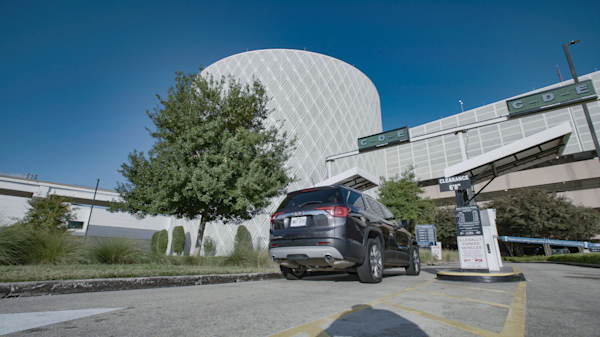
IAH Parking Information
Convenient parking is available, including reserved spots, EV charging, and accessible spaces.
Learn more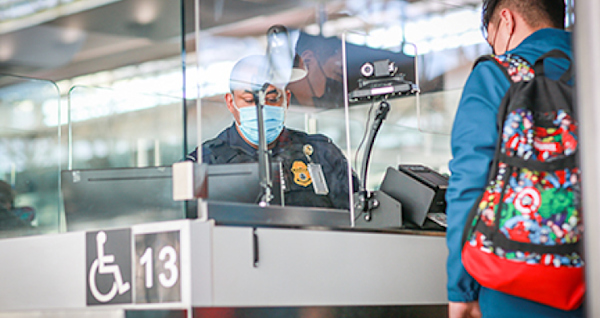
International Processing
International passengers will proceed through Customs & Immigration in the Terminal E international arrivals hall.
Learn more
Need Transportation
Choose from Rideshare apps, shuttles, or rental cars for convenient ground transportation options.
Learn more
Latest UpdatesNewsroom
View all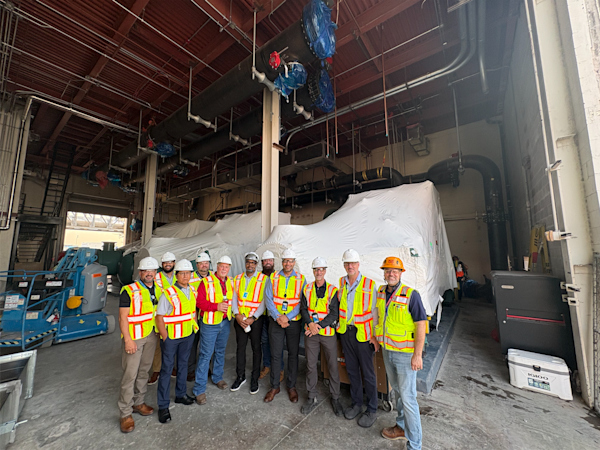 IAHConstructionNov 2, 2026
Houston Airports prepares to modernize plant that keeps IAH cool
At George Bush Intercontinental Airport (IAH), a former boiler room is helping solve a problem passengers should never have to think about: how to replace the equipment that cools their terminal without turning off the air conditioning.The former boiler room now houses three smaller chillers to support cooling while Houston Airports modernizes its Central Utilities Plant at IAH.The plant supplies chilled water for air conditioning and hot water for heating in IAH’s core terminal area. Chillers cool the water, which travels through pipes to equipment that uses it to absorb heat from terminal air. What passengers feel is the result, not the machinery.The system’s importance became clear in June 2023, when two chillers failed within 24 hours and temperatures rose inside the terminals. Temporary chillers helped restore cooling, but the failures added urgency to modernization plans already underway.Starting in 2027, Houston Airports will replace four chillers and pumps, install a new roof and repair the plant’s utility tunnel. The work will continue through 2028. Hensel Phelps is the design-build contractor.“This is not a project where we can turn everything off and start over,” said Scott Hill, chief infrastructure officer for Houston Airports. “We have to put support in place first, then replace equipment in a sequence that keeps the airport operating. Those preparations are just as important as the new equipment itself.”Built in the 1960s and expanded over the decades, the plant has equipment at or nearing the end of its service life. The modernization is designed to increase cooling capacity, improve efficiency and provide decades of additional service from major equipment components.Houston Airports Director of Aviation Jim Szczesniak, Chief Operating Officer Kelly Woodward and other senior leaders toured the facility in November to review preparations for the work ahead.“Passengers should be thinking about where they are going, not whether the airport’s cooling system can keep up,” Hill said. “Investing in this critical asset is part of taking care of the people who use our airport today and making sure the infrastructure is ready to serve them for years to come.”Read more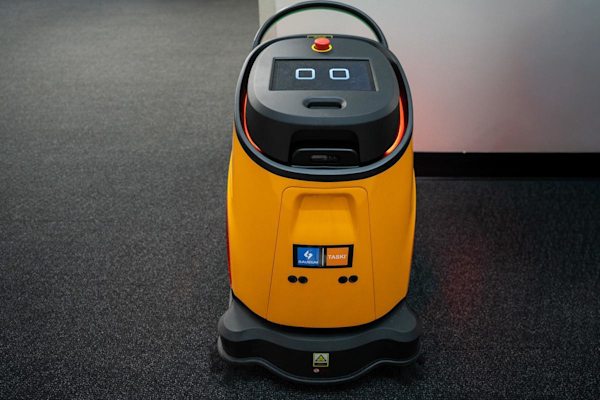 IAHAmenitiesOct 30, 2026
IAH is first U.S. airport to deploy TASKI robotic sweeper-scrubber combination
Four robots are helping custodians keep floors clean at George Bush Intercontinental Airport (IAH), taking on repetitive work so employees can focus on restrooms, high-touch surfaces and immediate passenger needs.The deployment makes IAH the first Texas airport to use TASKI robotic cleaning technology and the first U.S. airport to deploy the company’s combination of autonomous sweepers and scrubbers. Houston Airports placed the four machines into operational use the week of Aug. 10.“Maintaining 2.1 million square feet is a round-the-clock responsibility, and innovation helps us use every resource wisely,” said Cliff Price, general manager of IAH for Houston Airports. “These robots are not replacing our custodians. They are handling repetitive floor care so our employees can devote more time to work that requires human attention and immediate passenger needs.”Each machine has an assignment suited to its size and capabilities:- One TASKI Phantas works in the security queue inside the Terminal E Ticketing Lobby. Designed for tighter spaces, the compact robot sweeps, vacuums, scrubs and dust-mops, with manufacturer-rated coverage of up to 7,535 square feet per hour.- One Ecobot 50 works on the Terminal E mezzanine level. It can scrub and dry up to 19,375 square feet per hour and can use diamond pads to clean and enhance the shine of the terrazzo flooring.- Two Ecobot 40 sweepers work in the Terminal D-West concourse. Each can sweep and vacuum up to 12,916 square feet of carpet or hard flooring per hour.Those figures reflect manufacturer-rated productivity. Actual coverage varies with passenger traffic, floor type, cleaning mode and terminal conditions.The machines work independently, but not without human oversight. Employees map and assign cleaning routes. The robots then use laser-based navigation, cameras and sensors to detect passengers, luggage and other obstacles and adjust their paths. Custodians oversee routing, performance and maintenance.That division of labor leaves people responsible for the work that requires judgment and direct attention. Custodians clean restrooms multiple times daily and disinfect high-touch surfaces, including handrails, seating and tables, throughout the day. Service increases with passenger traffic.Passengers also help identify where attention is needed. Digital feedback screens inside airport restrooms allow travelers to select a happy or sad face and submit comments. Negative ratings automatically trigger a prioritized custodial response.The robots add to an established cleaning operation. During FIFA World Cup 2026, before the TASKI deployment, restrooms maintained by Houston Airports recorded about 1 million visits and earned a 94% positive passenger rating.Houston Airports plans to expand the robotic fleet at IAH. Additional floor cleaning robots are budgeted for Terminals A, D and E and the airport Subway tunnel.Read more IAHHOUAmenitiesHASOct 8, 2026
Find EV charging at ecopark before flying from IAH or HOU
Travelers who want to charge an electric vehicle while flying from Houston's airports should plan to park at ecopark. Choosing the right lot before leaving home helps drivers head straight to the charging location.Where to plug inAt IAH, travelers can find EV charging at:- ecopark on John F. Kennedy Boulevard- ecopark2 on Will Clayton Parkway. A parking reservation is required for entry.At HOU, EV charging is available at the airport’s ecopark lot.Before traveling, visit the airport’s parking page for lot details, directions and reservations.Electric vehicles behind the scenesThe commitment to electric vehicles extends beyond passenger parking.Houston Airports has 57 electric vehicles in its fleet — nearly 60 trucks and vans supporting the work that keeps its airports running. In May, the system added 32 electric vehicles to replace gas-powered vehicles across IAH, HOU and Ellington Airport (EFD)/Houston Spaceport.The additions include Ford F-150 Lightning trucks and Ford E-Transit utility vans for teams handling maintenance, information technology and other airport operations. Replacing gas-powered work vehicles with electric models reduces tailpipe emissions from those daily trips.Progress in reducing emissionsFleet electrification is one part of the airport system's work to reduce its carbon footprint. Other investments include LED lighting, more efficient energy systems and a solar canopy that generates electricity for Hobby Airport operations.In September, Houston Airports reported a 23% systemwide reduction in carbon emissions from its 2019 baseline. From 2019 to 2024, emissions fell 31% at IAH, 28% at HOU and 11% at EFD.All three airports achieved Level 3 in Airports Council International’s Airport Carbon Accreditation program in 2025 and were renewed at Level 3 in 2026. That level expands the work to include collaboration with airlines and other airport partners on managing emissions.Read more
