The jet that folded its wings at IAH
Boeing's 777X spent less than a day in Houston after testing in Bolivia, giving travelers a rare glimpse of the next generation of international air travel.
Nov 23, 2026
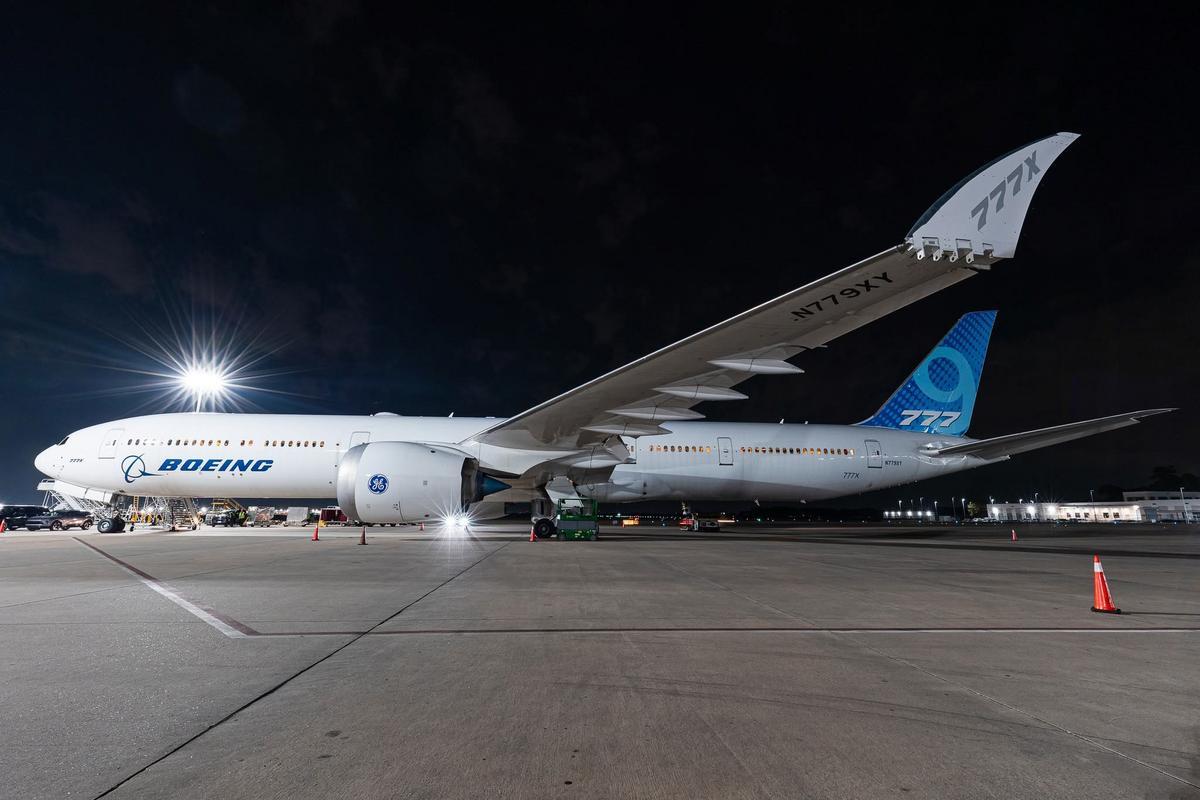
Most visitors arrive in Houston with luggage. This one arrived with folding wings.
Just before 7 p.m. Friday, Nov. 6, a Boeing 777-9 touched down at George Bush Intercontinental Airport (IAH). It was nearly 252 feet long, powered by two of the largest jet engines ever built and capable of folding its wingtips upward like a bird settling in for the night.
The aircraft stayed less than 19 hours before departing for Seattle the following afternoon.
It wasn't carrying vacationers. There were no tickets to buy, no boarding announcement and no new flight route to celebrate.
But the brief visit offered something more intriguing: an early look at an airplane designed to change how hundreds of passengers travel across continents and oceans.
And there's a reason Houston was on its itinerary.

It had just completed a visit to Bolivia, where Boeing was conducting high-altitude testing at Alcantarí International Airport near Sucre, more than 10,000 feet above sea level.
Up there, the air is thinner. Aircraft engines produce less thrust, wings generate less lift and takeoffs and landings become more demanding.
For engineers developing a new passenger jet, those conditions provide an important test of how the aircraft performs.
The 777-9 traveled from Bolivia's Santa Cruz airport to Houston on Nov. 6, landing at IAH at approximately 6:43 p.m. The following day, it departed at 1:24 p.m. for Boeing Field in Seattle, where the manufacturer's flight-test program is based.
Its appearance did not go unnoticed.
A passenger aboard a nearby United Airlines flight described the unexpected encounter on Reddit.
"It's pretty massive! It taxied right by our 737 while we waited for the alley to clear up earlier this evening."
Aviation enthusiasts also followed the aircraft's journey online, sharing flight information and photographs of the unusual visitor.

And unusual it is.
Wait. The wings actually fold?
Yes. And there's a surprisingly practical reason.
The Boeing 777X is the next generation of the popular Boeing 777 family, designed to carry more passengers over longer distances while using less fuel.
Its most recognizable feature is a set of folding wingtips.
With its wings fully extended, the 777-9 measures roughly 235 feet from wingtip to wingtip. That's great for flying efficiently, but it creates a problem on the ground: Many airport gates and taxiways weren't designed for an airplane quite that wide.
Boeing's solution is clever.
The outer 11 feet of each wing can fold upward after landing, reducing the airplane's wingspan to approximately 213 feet.
Think of it as the aviation equivalent of folding in your vehicle's side mirrors before squeezing into a tight garage.
The wings extend and lock into position before takeoff, giving the aircraft the aerodynamic advantages of a larger wing in flight without requiring every airport to build larger parking spaces.
Then there are the engines.
Each GE Aerospace GE9X engine has a front fan measuring more than 11 feet across — wider than the fuselage of a Boeing 737.
That's not a typo.
According to GE Aerospace, the GE9X is the largest and most powerful commercial aircraft engine ever built.
It's an engineering achievement that's difficult to appreciate until you see one up close.
What does that mean for passengers?
The 777-9 is designed to accommodate approximately 375 to 450 passengers, depending on how an airline configures its cabin. Boeing says the aircraft can travel up to 8,000 nautical miles — roughly 9,200 statute miles — without stopping.
That kind of range gives airlines greater flexibility to connect distant cities with nonstop service.
Boeing also projects that the 777-9 will use approximately 20% less fuel and produce 20% fewer emissions than the aircraft it is designed to replace, with a substantially smaller noise footprint.
For passengers, the aircraft promises a spacious cabin and features inspired by Boeing's 787 Dreamliner. The exact seating, comfort features and onboard experience will ultimately depend on the airline operating it.

There is one important catch: The airplane isn't ready for regular passenger service.
The 777X program has experienced years of development and certification delays. Boeing originally planned for the aircraft to enter service in 2020. The manufacturer now expects its first 777-9 delivery in 2027, subject to completing regulatory certification.
That's why the testing in Bolivia mattered — and why the Houston stop represented a moment in a much longer journey.
A glimpse of what's next
At IAH, widebody aircraft already connect Houston with destinations across Europe, Asia, Latin America and beyond.
The 777X represents the next chapter of that global aviation story: larger, more efficient aircraft designed to carry hundreds of people farther while working within existing airport infrastructure.
Its brief appearance at IAH wasn't an announcement of future airline service or a guarantee the aircraft will eventually operate scheduled flights through Houston.
It was a Boeing test aircraft on its way home.
Still, amid the Thanksgiving rush, when most travelers are thinking about traffic, parking and whether their flights will depart on time, the visit offers a different perspective.
The future of flying isn't only about where airports can take us. It's also about the aircraft that will get us there.