Severe Weather & Delays
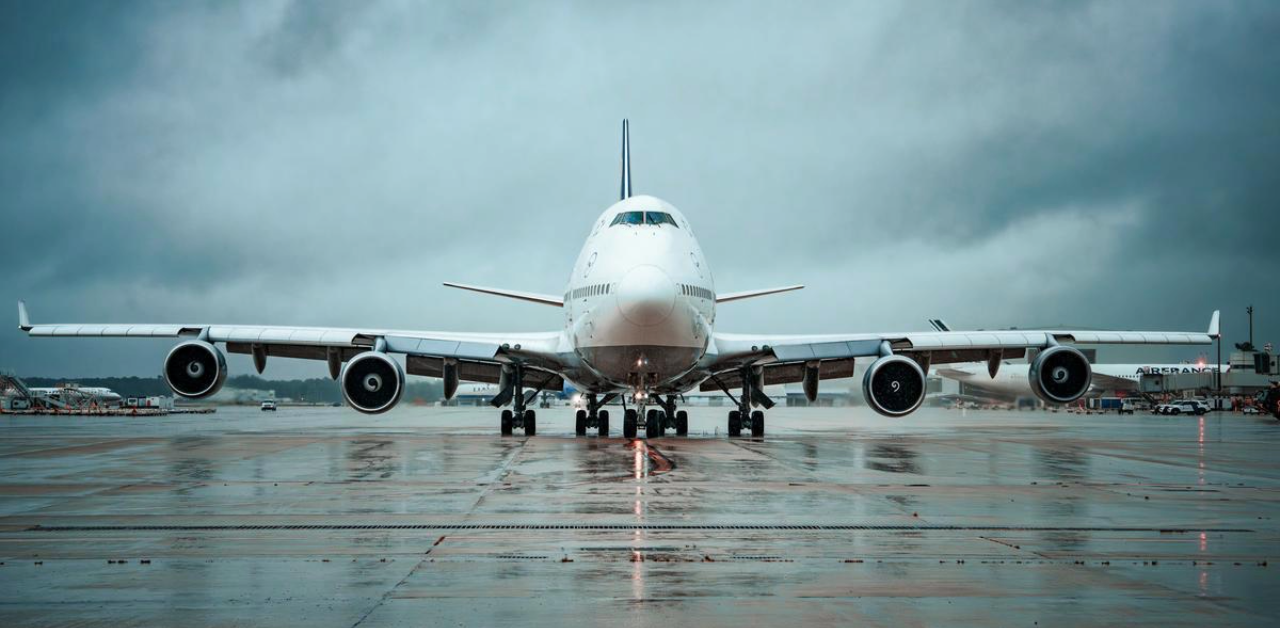
Severe weather can disrupt flights, baggage, roadways and airport operations. Use this page to check flight impacts, understand what happens during weather delays and plan ahead before coming to the airport.
Airlines provide the most current information about flight delays, cancellations, rebooking and baggage. Check your airline’s app or website before heading to the airport.
Severe weather FAQs
Weather delays can create backlogs of arriving and departing flights. Crews must complete safety inspections, prepare gates, refuel aircraft and clear operational delays before flights return to normal.
Lightning and heavy rain can pause outdoor work, including baggage unloading. Once conditions are safe, crews resume baggage handling as quickly as possible.
After severe weather, multiple aircraft may be waiting for available gates. Airlines, ground crews and the FAA work through the backlog as operations recover.
Use the cell phone lots and wait until your passenger is at the curb with bags in hand. Do not circle the terminal or wait in active loading zones.
Check your airline’s app or website for flight updates. Houston Airports also shares updates on fly2houston.com, social media, terminal monitors and airport announcements.
No. Airports are not shelters or warming centers. Houston Airports remains focused on safe airport operations for travelers.
Waiting at IAH?
Use free Wi-Fi, explore dining and retail options or enjoy public art and Harmony in the Air performances while operations recover.
Waiting at HOU?
Use free Wi-Fi, grab a meal, explore local concessions or relax near HOU’s public art while operations recover.
Learn MoreSevere Weather Coverage
View all IAHHOUCommunityJan 17, 2025
Houston Airports Severe Weather Resource Center
How severe weather impacts airport operations and flights-------------------------------------------------------------Delays caused by severe weather often result in longer processing times for baggage and additional checks before aircraft can return to service. Houston Airports understands how frustrating weather-related delays can be for passengers, their families and even our own operations teams. That’s why we work closely with airlines and the FAA to resume operations as quickly and safely as possible once the storm has passed. Safety is our top priority. While the delay can be frustrating, safety measures protect workers and passengers.Weather and ground stops: Just like a rain delay at a sporting event, severe weather can bring airport operations to a halt. For instance, when lightning is detected around Bush Airport (IAH) or Hobby Airport (HOU), safety rules recommend ground crews pause all outdoor activity and seek shelter until the threat passes.These events, called ground stops, affect flights scheduled to take off and can also delay inbound flights, causing ripple effects across the air travel network. The FAA can also issue delays or airport closures due to severe weather.MORE INFORMATION | View the current FAA National Airspace System StatusGate congestion and delays: Severe weather often causes a backlog of arriving and departing flights, leading to gate congestion. Aircraft may need to wait for available gates or be repositioned, resulting in extended wait times for passengers. These delays aren't only caused by weather. As operations resume, the FAA’s air traffic management can contribute to further delays, which can also be compounded by the airlines themselves, which might need to reconfigure crew schedules and adjust their flight timetables to comply with safety standards.Tarmac and baggage delays: Once lightning strikes or heavy rain halts activity, baggage handling and aircraft servicing are also delayed. Crews cannot unload luggage or refuel planes until it’s safe to resume outdoor activity. This can create longer wait times at baggage claim areas.Spot the orange. Find the help you need. Our ‘Houston-Friendly’ airport employees are easy to spot in their bright orange polo shirts. They are available to answer questions and help you navigate the airport."Severe weather can create unavoidable disruptions, but the safety of our passengers and employees always comes first. Houston Airports is working closely with airlines and the FAA to restore operations as quickly and safely as possible. While weather delays are frustrating, our focus remains on providing clear communication, world-class service and a comfortable experience for all travelers as we work to keep Houston moving," said Jim Szczesniak, director of aviation for Houston Airports.While You Wait: We encourage passengers to make the most of their downtime. Grab a bite to eat, fill up your water bottle and enjoy complimentary Wi-Fi available throughout our terminals. Our award-winning art exhibits and live music performances are designed to make your experience as comfortable as possible.Explore our amenities at Bush Airport and Hobby AirportStay ahead of the storm Download your airline’s app for real-time notifications on your flight’s status. Arrive early, especially during peak seasons or when severe weather is forecasted. Use the cell phone lots and active loading zones to reduce curbside congestion. Take advantage of the free Houston Airports Wi-Fi and amenities to make your wait more comfortable.Explore our Severe Weather Resource Center----------------------------------------------What to expect as airport operations recover from severe weatherFrequently Asked Questions: Navigating delays during severe weatherRead more IAHHOUCommunityJan 17, 2025
What to expect as airport operations recover from severe weather
Severe weather can disrupt air travel, causing delays, cancellations, and operational backlogs. While Houston Airports prioritizes safety and efficiency, recovery efforts require time and coordination between multiple agencies and partners. Understanding what happens behind the scenes can help passengers set realistic expectations and plan ahead.Understanding each role Houston Airports: Provides safe and clean facilities, maintains runways and taxiways, oversees vehicular traffic flow and communicates updates to airport guests. Houston Airports does not control flight schedules, delays or cancellations. Airlines: Manage and adjust flight schedules, cancellations, re-bookings, baggage handling and specific communication with their passengers. They also determine when flights are ready to depart or arrive based on crew availability and aircraft readiness. Federal Aviation Administration (FAA): Monitors weather conditions, reopens airspace, clears aircraft for takeoff and landing and oversees air traffic control to ensure safe operations.Step 1: Safety Inspections and Clearance After the storm, crews inspect runways, taxiways and lighting systems to ensure they are safe and operational. This step includes clearing debris and confirming proper drainage. FAA air traffic controllers must authorize all takeoffs and landings.Step 2: Resuming Operations Ground crews return to service, focusing first on unloading luggage, refueling planes, and repositioning aircraft to gates. This process takes time, especially when multiple flights are affected, resulting in backlogs that may delay gate assignments for arriving flights.Step 3: Addressing Backlogs Once ground operations resume, crews work through accumulated tasks, including reuniting passengers with baggage and preparing aircraft for their next departures. Airlines may prioritize certain flights based on passenger volume, crew schedules, and available gates.What Can Passengers Expect? Flight delays: Even after the weather clears, delayed flights must wait for clearance, fueling and available gates. Longer waits for baggage: Baggage handling may experience temporary delays as crews process multiple arrivals. Overflow vehicle traffic: High passenger volumes can lead to road congestion at terminal curbsides.How Passengers Can Stay Informed and Prepared1. Monitor Airline Apps and Websites: Airlines provide the most up-to-date information about flight statuses, rebooking options and baggage updates.2. Use Cell Phone Lots: To ease congestion, wait in designated cell phone lots until passengers are at the curb with their bags.3. Follow Active Loading Zone Rules: Be ready to pick up or drop off passengers quickly to keep traffic flowing.4. Stay Connected with Houston Airports: For the latest updates, check our website, social media and in-terminal monitors.Patience and preparedness are key: Severe weather recovery takes time, but Houston Airports is dedicated to supporting travelers throughout the process. From providing complimentary Wi-Fi and customer service assistance to offering diverse dining and retail options, we aim to make your experience as smooth as possible.Houston Airports is committed to maintaining clean facilities, offering world-class customer service and keeping passengers informed. Our custodial teams work around the clock to ensure restrooms and common areas are clean and comfortable. Information counters and customer service representatives are available to assist passengers with questions while our concessions partners work to ensure food and beverages are available for purchase.Learning from every storm: We take every weather event as an opportunity to evaluate and improve our response. Houston Airports continuously works to streamline operations, deploy additional staff and deliver timely updates to passengers. By focusing on safety, communication and passenger comfort, we strive to exceed expectations—even in challenging conditions.Return to Severe Weather Resource CenterRead more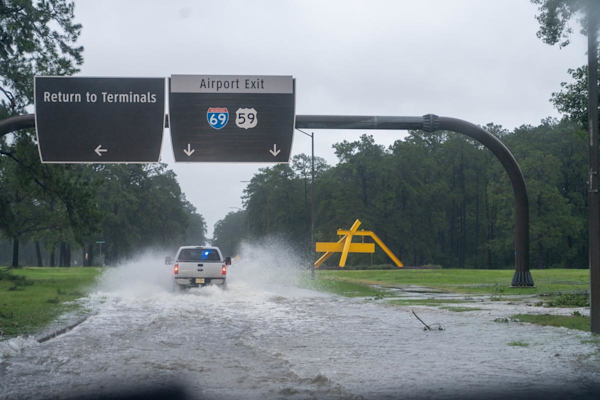 IAHHOUJul 1, 2025
Houston Airports: Engineering for the eye of the storm
When Hurricane Beryl tore into the Texas Gulf Coast in July 2024, it wasn’t just another storm. Beryl slammed ashore as a deadly hurricane, knocking out power to more than 2 million homes and businesses, crippling critical infrastructure and forcing both George Bush Intercontinental Airport (IAH) and William P. Hobby Airport (HOU) to halt operations. For Houston Airports, it was a defining test — and a stark reminder of how quickly a major storm can unravel even the most carefully orchestrated operations.“We see every storm as a chance to get stronger,” said Scott Hill, deputy director of infrastructure for Houston Airports. “Beryl exposed gaps, but it also gave us a clear roadmap for how to improve.”In the 12 months since Beryl, Houston Airports has launched targeted upgrades, many of them invisible to passengers, but critical to keeping the airport system moving when severe weather strikes again.Portable power, on demandOne of the most visible lessons came on the roadways leading to Bush Airport. As traffic signals failed and curbside areas grew chaotic, officials turned to a surprisingly nimble solution: Ford F-150 Lightning trucks.Originally purchased as part of the airport system’s commitment to sustainability, the electric pickups were quickly repurposed as mobile power generators. Crews used them to power traffic lights and keep traffic flowing even as much of the region remained dark.“That was a real-world test for us,” Hill said. “During Beryl, we used the Lightnings to keep key intersections powered. That kept traffic moving and got employees and passengers where they needed to be. Now, it’s part of our standard playbook.”In addition to the Ford Lightnings, Houston Airports secured new pre-storm generator contracts, allowing portable units to be staged on site before any system enters the Gulf.“When you lose power, every minute counts,” Hill said. “The goal is to stay operational, not just recover.”Houston Airports has also changed its protocols around electric vehicle usage during hurricanes. Employees and travelers are now encouraged to fully charge their electric vehicles ahead of landfall to maximize flexibility and assist others if needed.Clearing risks before the wind blowsIn airfield operations, one of the quietest but most impactful changes began immediately after Beryl.“In aviation, debris is the enemy,” said Angel Santos, who leads the IAH airside operations and maintenance division for Houston Airports. “Fallen trees, unsecured equipment and loose materials are major hazards during high winds.”In the months before the 2025 hurricane season, crews removed more than 100 dead or compromised trees along airport roadways and airfield zones. The removals are part of a long-term tree management program to reduce projectile risks before hurricane-force winds arrive.“That’s 100 fewer things we have to worry about flying across our roadways or tarmacs,” Santos said. “Prevention happens before the storm shows up.”At Terminal A, Houston Airports replaced aging jet bridges with an eye on long-term resiliency.“The new bridges aren’t just newer, they’re smarter,” Santos said. “Every one of them now includes hurricane-grade tie-down systems to better anchor the bridges during high winds. It’s a detail most people never notice, but one that makes a huge difference when a storm arrives.”The added reinforcements reduce the risk of bridges being damaged, dislodged or rendered unsafe during sustained tropical winds.Hobby Airport’s approach: precision and preventionAt Hobby Airport, many of Beryl's lessons translated into rapid upgrades.“We’ve been aggressive about identifying and removing any compromised trees that could become projectiles during a wind event,” said Jude Nwambuonwo, division manager of HOU terminal maintenance for Houston Airports. “Every tree we trim or remove is one less hazard for passengers, staff and critical infrastructure.”Drainage was another focus. Like IAH, Hobby maintenance crews turned summer storms into live exercises.“We don’t wait for the hurricane to tell us whether our drainage works,” Nwambuonwo said. “We use routine summer storms as live tests of our lift stations and pumping systems. That way, when the Gulf heats up, we’re not guessing.”Hobby’s terminal roofs also received targeted repairs ahead of the 2025 hurricane season.“We’ve made targeted roof repairs across terminal buildings to prevent water intrusion before it becomes a problem,” Nwambuonwo said. “Leaks may sound minor, but one compromised roof section can shut down a gate or entire terminal area during a storm.”Several jet bridges were also replaced at Hobby.“The new jet bridges were designed with storms in mind,” Nwambuonwo said. “They’re equipped with hurricane-grade tie-downs that allow us to secure the bridges in place even during sustained tropical winds.”Behind the scenes, HOU electricians and maintenance teams added another layer of readiness.“Our electricians and maintenance teams now have standby portable generators ready to go before any storm makes landfall,” Nwambuonwo said. “That allows us to keep essential systems powered and running, even if the grid goes down.”Water management as a daily disciplineBeyond wind, another key vulnerability for airports is water.“We’re not waiting for hurricanes to test our drainage,” Santos said. “Every major summer rainstorm is now an opportunity to pressure-test our lift stations and pumping systems.”When June storms moved through Houston this year, maintenance crews monitored how quickly and efficiently water was moved away from runways, taxiways and terminals. Data from those real-world events is used to make proactive adjustments long before the Gulf heats up.“Beryl taught us that you prepare before hurricane season starts, not after,” Santos said.Better for passengers, tooWhile much of the work happens behind the scenes, passengers will feel the improvements if another storm strikes.Portable generators now power and illuminate curbside check-in kiosks, walkways, traffic lights and terminal entrances. Reinforced roofs minimize leaks and closures. Redundant power feeds maintain TSA operations and baggage handling.Passenger communication has also been overhauled. Updated messaging through Fly2Houston.com, mobile apps and airline partners allows for earlier and more precise information when disruptions are likely.“When you give people honest, timely information, they can plan,” said Augusto Bernal, director of communications for Houston Airports. “That reduces stress for travelers, employees and the entire airport system.”Preparing for the next stormAs the 2025 hurricane season unfolds, Houston Airports stands on firmer footing. The power may still go out, the rain may still fall and the winds will still howl. But across Bush and Hobby, layers of hard-earned resilience are now in place. Systems are engineered to survive the next storm and keep passengers moving through it.“No airport can stop a hurricane,” Hill said. “But what we’ve built is a defense that gets stronger every single season.”[](https://apps.apple.com/us/app/houston-airports-official/id1613307854)Read more
