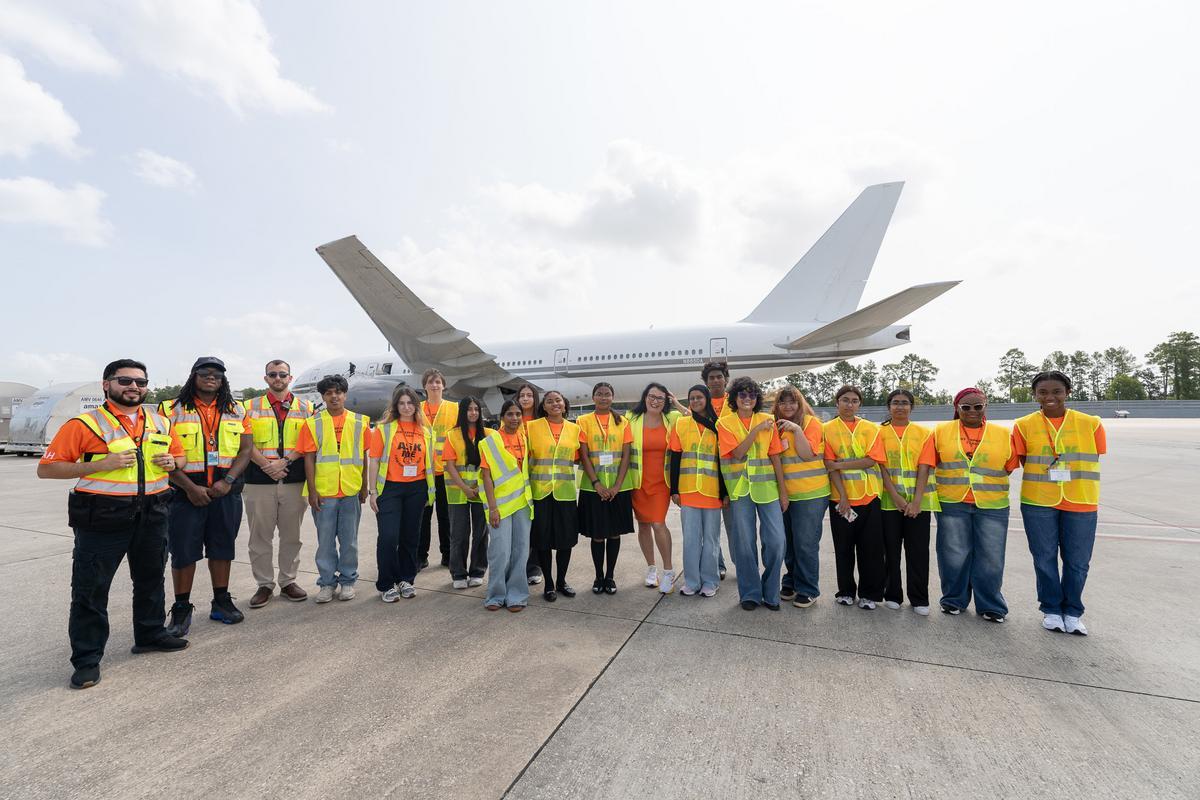
Two emails, four words: Teens find their voices at Houston Airports
Ella Ghica saw young volunteers change in the terminals. Jerrold Sarmiento saw the change follow his daughter home.
Aug 19, 2026
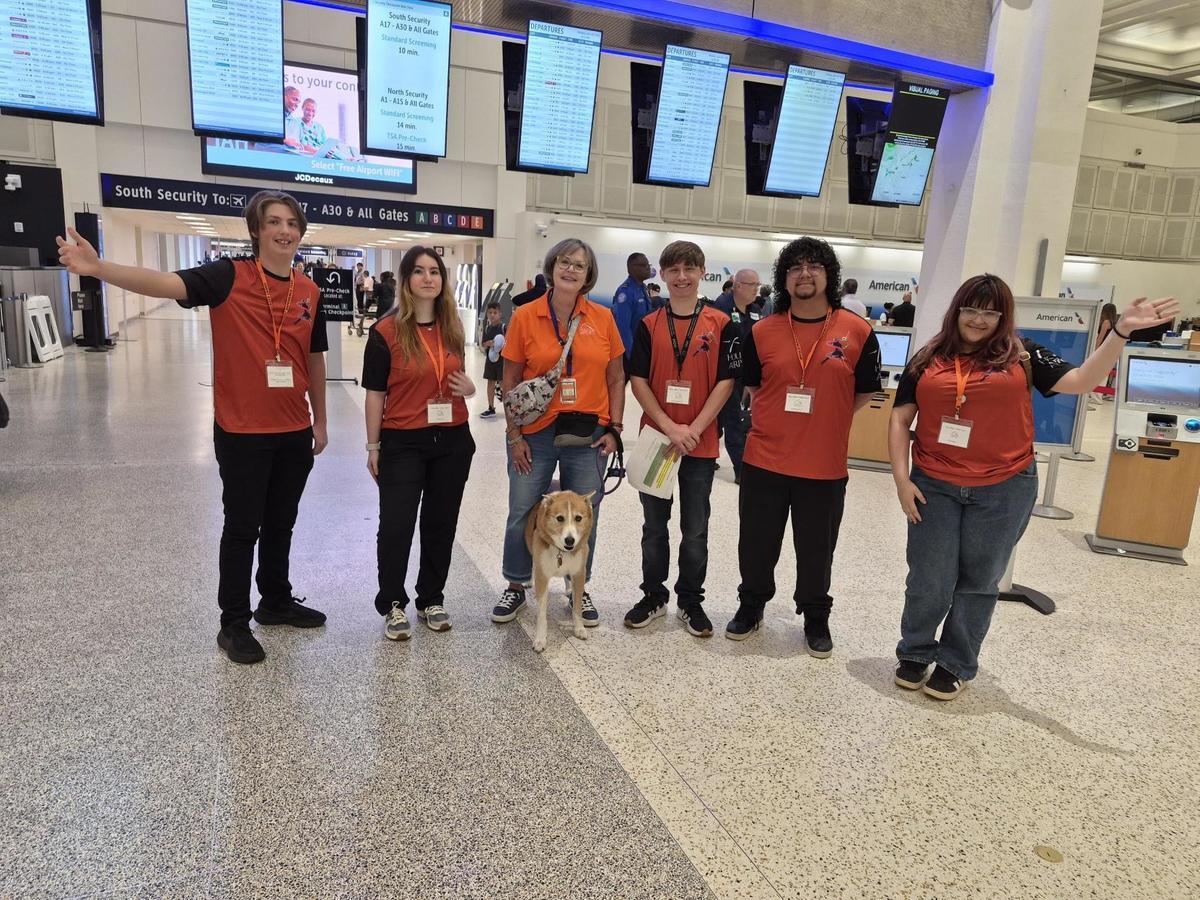
On a Tuesday morning in August, Ella Ghica sent a thank-you note to the families of teenagers who had spent their summer helping passengers at Houston’s airports.
A few hours later, one parent wrote back.
In her note, Ghica described what she witnessed in the terminals. In his reply, Jerrold Sarmiento described what he saw after his daughter came home.
Read together, the emails reveal what can happen when communication moves off a screen and into public life.
At the center are four words: “May I help you?”
“For many of the teens, approaching a passenger who appeared lost or needed assistance was challenging at first,” wrote Ghica, manager of outreach initiatives for the volunteer programs at George Bush Intercontinental Airport and William P. Hobby Airport. “It takes confidence to walk up to someone and ask, ‘May I help you?’”
In 2026, teenagers have not forgotten how to talk. They have simply grown up with time between thought and response. On a phone, tablet or computer, a message can be drafted and revised. Even a sent text can be edited. There is time to shape the response and the image it projects. Face-to-face conversation in an airport terminal offers no such buffer.
The need for help does not arrive as a smartphone notification. The teen volunteer has to recognize it and answer without rehearsal.
The Houston Airports Teen Volunteer Program, now in its second summer, is open to teenagers whose parents work for Houston Airports. Ghica’s email makes clear that confidence was not a prerequisite. It turned out to be one of the program’s results.

“After spending time in the terminals and gaining experience, we watched their confidence grow,” Ghica wrote. “Seeing that transformation was one of the most rewarding parts of the program.”
The teenagers were learning customer service, but they were also learning how to enter a moment that did not belong to them. Someone else was lost. Someone else was worried. To help, they had to turn their attention outward and speak first with enough assurance to put a traveler at ease. By the end of the summer, Ghica saw teenagers who had once hesitated become part of the daily rhythm of the airport.
“Your teens not only helped our passengers — they became a valued part of our airport family,” she wrote.
Sarmiento recognized the change Ghica described because he had been watching it from the other side.
A Houston Airports employee whose daughter participated in the program, Sarmiento saw what no airport supervisor could: the stories she carried through the front door.
“She came home with so many positive stories about helping passengers,” he wrote.
LEARN MORE: Volunteer with Houston Airports
Those stories were evidence of something deeper. His daughter was not merely recounting how she had spent her day. She was describing moments when she approached someone she did not know and became the person who could help.
“I could also see how the experience helped her become more confident in communicating with others and stepping outside of her comfort zone,” Sarmiento wrote.
His reply adds something an institutional thank-you note cannot: a parent’s knowledge of who a child was before the summer and what had begun to shift.
“It was much more than simply volunteering,” he wrote.
The program gave his daughter, Sarmiento said, “a greater understanding of what it means to serve others.”
Their two perspectives explain why a teen volunteer program matters at a moment when adolescence and air travel are increasingly mediated by technology.
A phone can guide a passenger to a gate. It cannot always recognize when someone is too uncertain to ask for help.
For the teenagers, the work required a different kind of attention. They had to watch the people in front of them.

That is a practical skill learned in public, one passenger at a time.
Ghica saw it in the terminals. Sarmiento saw it at home.
“We are very grateful to you and everyone at Houston Airports who welcomed, encouraged and guided the teens throughout the summer,” he wrote. “She will carry the lessons and memories from this summer with her for years to come.”
Next summer, when a teen volunteer asks, “May I help you?” those four words may help a passenger find their way — and a young person find their voice.