How Houston Airports beats the summer heat
Across IAH, HOU and EFD, water, preparation and teamwork help protect employees working through a Houston summer.
Aug 12, 2026
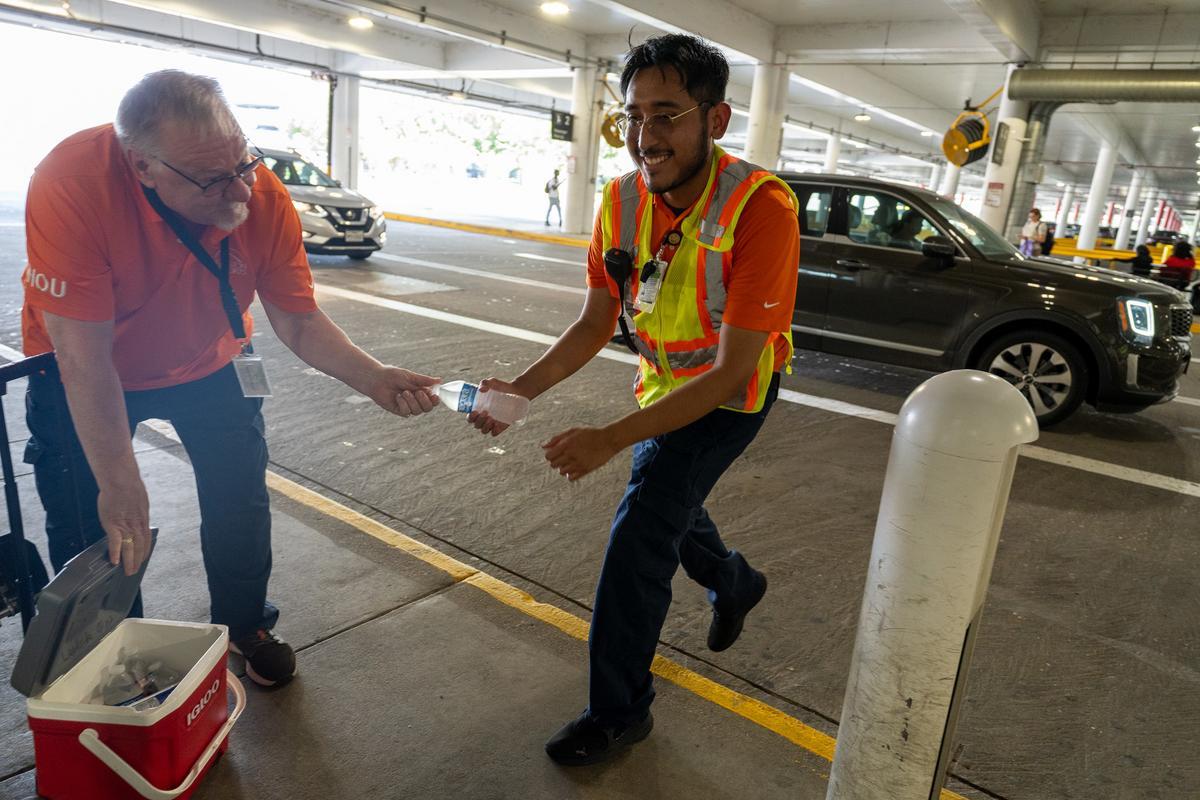
At William P. Hobby Airport (HOU), the handoff takes only a few seconds.
One employee reaches into a red cooler. Another, dressed to direct traffic along the curb, accepts a cold bottle of water and heads back toward the vehicles moving behind him.
There is no interruption to the work. Just one Houston Airports employee making sure another is ready to step back into the heat.
During a Houston summer, that small exchange carries real weight.
The work of keeping an airport moving extends far beyond its air-conditioned terminals. Houston Airports employees direct traffic along crowded curbs, inspect runways and taxiways, maintain airfields, respond to incidents and help passengers make their way through unfamiliar surroundings.
Some of the work is visible to passengers. Much of it is not. Nearly all of it continues even as temperatures climb.
Across HOU, George Bush Intercontinental Airport (IAH) and Ellington Airport (EFD), operations teams cover three shifts every day to maintain 24/7 operations. Each shift brings different assignments and challenges. During the summer, the people doing that work rely on the same basic protections: water, thoughtful planning, appropriate breaks and coworkers who pay attention.

At IAH, coolers are stocked across the terminals so employees can get water without stepping away from their responsibilities for long.
“During the summer heat, complimentary water and electrolytes are available on every shift, and during periods of extreme heat, employees across our operations can access water and freeze pops,” said Harold Anderson, terminal operations supervisor at IAH. “We have coolers available in every terminal, and employees are encouraged to grab what they need and cool off when they need to.”
Inside one supply cabinet, stacks of cups sit beside containers of electrolyte mix. It is a simple setup, but its purpose is clear: Give employees what they need before the heat begins to take a toll.

At HOU, John Kempf said the effort reflects a broader commitment to employee well-being, no matter the season.
“We want our employees to know that we’re looking out for them year-round,” Kempf said. “When Houston’s weather takes a turn for the cold, we’re there for our teams then, too, with hot beverages available to help keep everyone warm and comfortable.”
Water and cooling resources are one part of the strategy. Time is another.
Not every outdoor assignment can be moved. Airfield inspections, incident response and other critical duties must happen when they are needed. But when the work allows for flexibility, employees can arrange some assignments around the most intense heat of the day.
“Another way to beat the heat is to be proactive in planning our day,” said Ryan Walker, airside division manager at HOU. “Some may elect to do an early morning inspection while it’s cooler rather than wait until the heat of midday.”
That does not mean delaying essential work. It means knowing the day’s responsibilities, checking the conditions and making smart decisions about when flexible assignments can be completed safely.
On an open airfield, the difference can be significant.
There is little shade on the broad stretches of concrete where maintenance employees mow, paint, operate equipment and complete repairs. The sun reflects off the pavement as crews move through work that is physically demanding and essential to airport operations.

“Regardless of the shift, maintenance workers are out in the heat on a regular basis,” said Dwayne Pearson, maintenance supervisor at HOU. “Whether it’s the mowers in the morning or the painters on the airfield, it’s challenging to work in the elements. Our crews manage it by taking care of themselves, taking breaks and making sure they have enough water to stay hydrated.”
For employees assigned to terminals and curbs, portable cooling equipment and climate-controlled vehicles can offer relief between assignments when operations allow. Employees working outdoors are also encouraged to use appropriate sun protection and ask their managers about available hats or other resources.

But equipment and supplies are only effective when employees use them and recognize when someone may need help.
Heat illness does not always arrive dramatically. It can begin with a headache, nausea, dizziness, weakness, unusual fatigue or heavy sweating. An employee experiencing symptoms should stop working, move to a cooler area and notify a supervisor.
Confusion, slurred speech, loss of consciousness or seizures may signal heat stroke, a medical emergency. Call 911 immediately, begin cooling the person and do not leave them alone. Additional information is available through the Occupational Safety and Health Administration’s heat illness guidance.
Before heading outside, employees should fill their water bottles, know where they can cool down and ask their managers for any additional resources they need. They should also pay attention to the person working beside them.
At an airport, safety is often associated with major systems, specialized equipment and carefully coordinated operations. But during a Houston summer, it can also look like something much simpler: a cooler lid lifting and a cold bottle of water passing from one employee to another.
Take the water. Take the break. Then look out for the next person.