
Welcome toGeorge Bush Intercontinental Airport
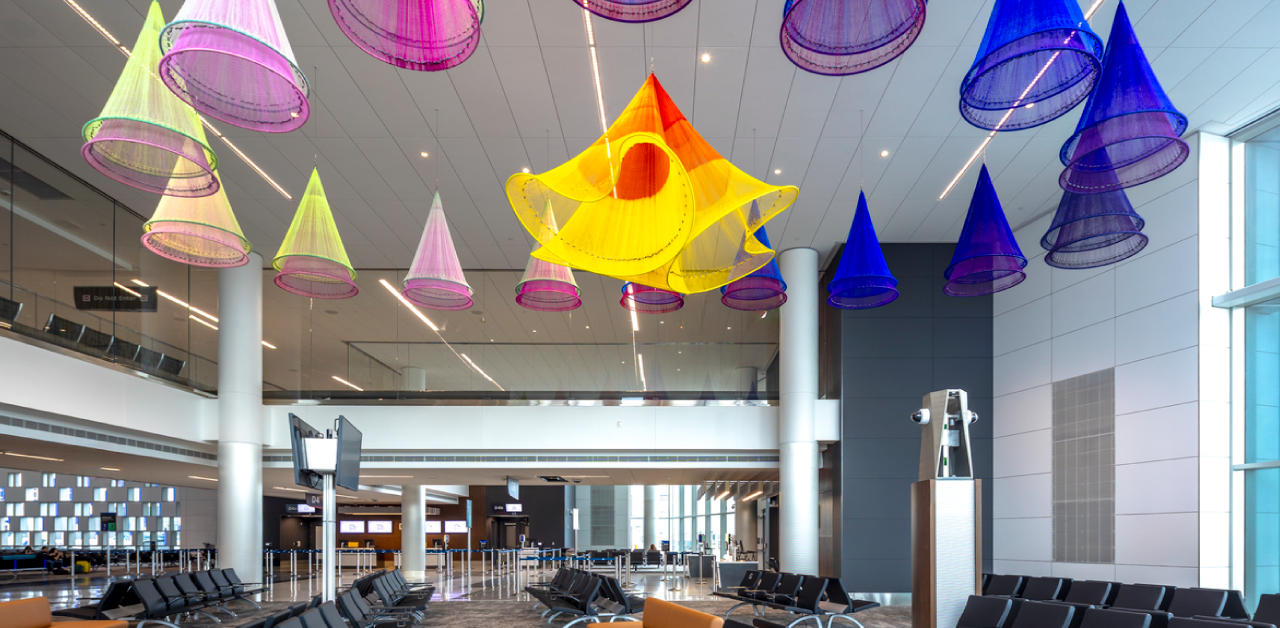
Check parking availability
Reserve your parking in advance and save up to 50%.Learn moreGet through security faster
Check security wait times to make sure you will get through security with ease!Security Wait TimesPlan your ride from the airport
Find ground transportation options including bus routes, car rentals, rideshare apps, shuttles, and more.Ground Transportation


Good to know
Airport Services
IAH provides a variety of service-oriented amenities to enhance your travel experience.
Good to knowQuick links
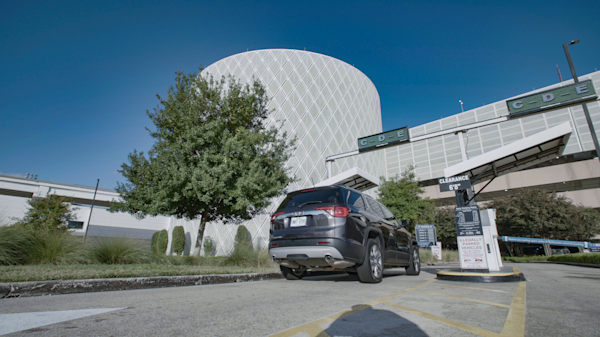
IAH Parking Information
Convenient parking is available, including reserved spots, EV charging, and accessible spaces.
Learn more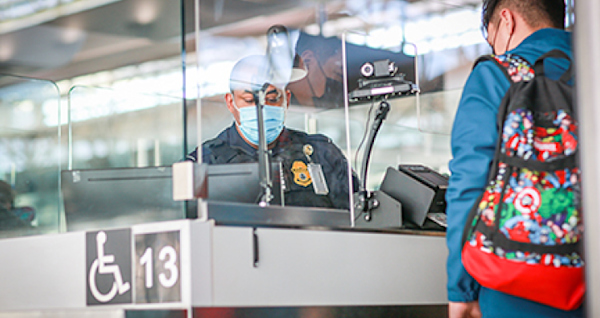
International Processing
International passengers will proceed through Customs & Immigration in the Terminal E international arrivals hall.
Learn more
Need Transportation
Choose from Rideshare apps, shuttles, or rental cars for convenient ground transportation options.
Learn more



Latest UpdatesNewsroom
View all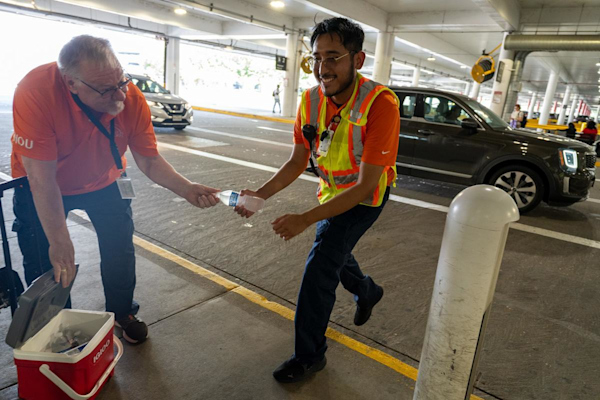 HASIAHHOUAug 12, 2026
How Houston Airports beats the summer heat
At William P. Hobby Airport (HOU), the handoff takes only a few seconds.One employee reaches into a red cooler. Another, dressed to direct traffic along the curb, accepts a cold bottle of water and heads back toward the vehicles moving behind him.There is no interruption to the work. Just one Houston Airports employee making sure another is ready to step back into the heat.During a Houston summer, that small exchange carries real weight.The work of keeping an airport moving extends far beyond its air-conditioned terminals. Houston Airports employees direct traffic along crowded curbs, inspect runways and taxiways, maintain airfields, respond to incidents and help passengers make their way through unfamiliar surroundings.Some of the work is visible to passengers. Much of it is not. Nearly all of it continues even as temperatures climb.Across HOU, George Bush Intercontinental Airport (IAH) and Ellington Airport (EFD), operations teams cover three shifts every day to maintain 24/7 operations. Each shift brings different assignments and challenges. During the summer, the people doing that work rely on the same basic protections: water, thoughtful planning, appropriate breaks and coworkers who pay attention.At IAH, coolers are stocked across the terminals so employees can get water without stepping away from their responsibilities for long.“During the summer heat, complimentary water and electrolytes are available on every shift, and during periods of extreme heat, employees across our operations can access water and freeze pops,” said Harold Anderson, terminal operations supervisor at IAH. “We have coolers available in every terminal, and employees are encouraged to grab what they need and cool off when they need to.”Inside one supply cabinet, stacks of cups sit beside containers of electrolyte mix. It is a simple setup, but its purpose is clear: Give employees what they need before the heat begins to take a toll.At HOU, John Kempf said the effort reflects a broader commitment to employee well-being, no matter the season.“We want our employees to know that we’re looking out for them year-round,” Kempf said. “When Houston’s weather takes a turn for the cold, we’re there for our teams then, too, with hot beverages available to help keep everyone warm and comfortable.”Water and cooling resources are one part of the strategy. Time is another.Not every outdoor assignment can be moved. Airfield inspections, incident response and other critical duties must happen when they are needed. But when the work allows for flexibility, employees can arrange some assignments around the most intense heat of the day.“Another way to beat the heat is to be proactive in planning our day,” said Ryan Walker, airside division manager at HOU. “Some may elect to do an early morning inspection while it’s cooler rather than wait until the heat of midday.”That does not mean delaying essential work. It means knowing the day’s responsibilities, checking the conditions and making smart decisions about when flexible assignments can be completed safely.On an open airfield, the difference can be significant.There is little shade on the broad stretches of concrete where maintenance employees mow, paint, operate equipment and complete repairs. The sun reflects off the pavement as crews move through work that is physically demanding and essential to airport operations.“Regardless of the shift, maintenance workers are out in the heat on a regular basis,” said Dwayne Pearson, maintenance supervisor at HOU. “Whether it’s the mowers in the morning or the painters on the airfield, it’s challenging to work in the elements. Our crews manage it by taking care of themselves, taking breaks and making sure they have enough water to stay hydrated.”For employees assigned to terminals and curbs, portable cooling equipment and climate-controlled vehicles can offer relief between assignments when operations allow. Employees working outdoors are also encouraged to use appropriate sun protection and ask their managers about available hats or other resources.But equipment and supplies are only effective when employees use them and recognize when someone may need help.Heat illness does not always arrive dramatically. It can begin with a headache, nausea, dizziness, weakness, unusual fatigue or heavy sweating. An employee experiencing symptoms should stop working, move to a cooler area and notify a supervisor.Confusion, slurred speech, loss of consciousness or seizures may signal heat stroke, a medical emergency. Call 911 immediately, begin cooling the person and do not leave them alone. Additional information is available through the Occupational Safety and Health Administration’s heat illness guidance.Before heading outside, employees should fill their water bottles, know where they can cool down and ask their managers for any additional resources they need. They should also pay attention to the person working beside them.At an airport, safety is often associated with major systems, specialized equipment and carefully coordinated operations. But during a Houston summer, it can also look like something much simpler: a cooler lid lifting and a cold bottle of water passing from one employee to another.Take the water. Take the break. Then look out for the next person.Read more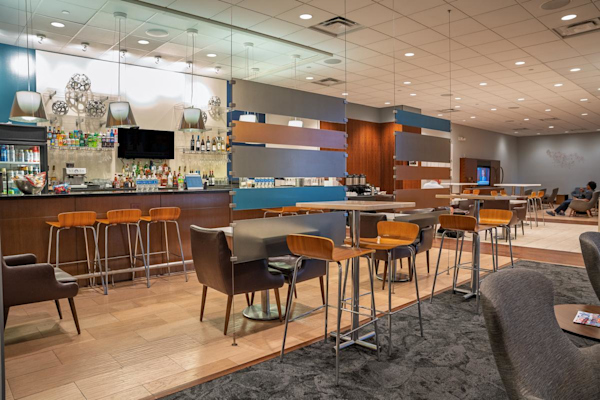 IAHAmenitiesConcessionsAug 4, 2026
Houston Airports completes full renovation of IAH Executive Club
A fully renovated lounge is now welcoming international travelers at George Bush Intercontinental Airport (IAH).The Houston Airports IAH Executive Club opened this summer near Gate D12 in Terminal D following a complete interior renovation. Every piece of furniture is new, along with fresh paint, updated décor and redesigned seating areas that give the lounge a modern look and feel.Operated by SSP America, the lounge serves qualifying passengers flying with British Airwawys, Emirates and EVA Airlines. Qualifying passengers will note access to the Executive Club on their boarding pass. Operating hours are coordinated with the flight schedules of airlines using the surrounding gate area. The refreshed layout offers several distinct spaces for travelers. High-back chairs and smaller seating areas provide added privacy, while sofas, lounge chairs and bar-height tables give passengers options for relaxing, dining or catching up on work before boarding.A central food and beverage area includes buffet service, a dedicated bar and seating for individuals and groups. Amenities include complimentary Wi-Fi, a meeting room and televisions, along with snacks, beverages and reading materials.Located after security on Level 2 of Terminal D, the lounge is convenient for passengers departing from IAH’s international gates.The renovation supports the airport system's continued focus on modernizing facilities and creating a more comfortable, passenger-focused experience throughout IAH.Read more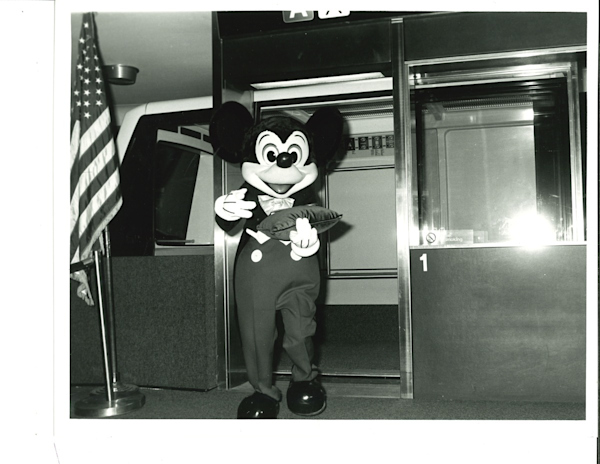 IAHAmenitiesCommunityAug 3, 2026
The Disney-built subway beneath Bush Airport turns 45
Its story is unlike any other in aviation.Beneath George Bush Intercontinental Airport (IAH) lies a piece of Disney history still moving millions of passengers a year. Most travelers don’t know it.This August marks 45 years since the airport’s Subway opened Aug. 17 1981, a system rooted not in aviation, but in imagination. Long before it carried business travelers and families between terminals, the technology behind it was designed for a different purpose: a glimpse into the future.It began in Tomorrowland.LEARN MORE | History of the IAH SubwayIn the late 1960s and early 1970s, Walt Disney and his team of engineers were building more than theme park attractions. They were experimenting with real-world transportation systems. One of those concepts became the PeopleMover, a continuously moving train designed to be quiet, efficient and nearly fail-proof.The team behind it was known as WED Enterprises—named for Walter Elias Disney himself. The initials reflected Walt Disney’s direct involvement in shaping the company’s most ambitious ideas.The WEDway PeopleMover debuted at Walt Disney World in 1975. A year later, it was certified for urban transit use by the Urban Mass Transportation Administration, signaling something unusual: a theme park concept that could function in the real world.At the time, Bush Airport was growing. Terminals were expanding. Terminal C was under construction. Passenger volumes were increasing. And moving people across three terminals—A, B and C— was going to be a problem that could no longer be solved with a conventional inter-terminal train. The story goes that a Disney executive, who frequently traveled through Houston, experienced those frustrations firsthand. Delays. Breakdowns. A train system that did not keep pace with the airport around it.So he made a pitch that sounded more like a challenge than a proposal.Disney could build a system that would work 99 percent of the time.If it didn’t, Houston wouldn’t have to pay.The city declined the informal offer. But the idea stayed.Houston launched a formal, competitive bid process. And when the proposals were evaluated, Disney’s WEDway system stood apart. Not because it was the most complex, but because it was the most dependable and would cost Houston Airports only $14.5 million.The system was built on simplicity. Lightweight vehicles. Linear induction motors. Power delivered through the track rather than onboard systems. Fewer moving parts meant fewer opportunities to fail.Houston selected WEDway in 1979, making IAH the only airport in the world to install a Disney-designed PeopleMover outside of a Disney property.The Subway opened in August 1981. The debut carried a sense of occasion that matched its origin story. Mickey Mouse and Donald Duck joined Houston leaders to mark the launch, a rare moment where theme park innovation and aviation infrastructure shared the same stage.What followed was less visible, but far more important.The system worked.From the beginning, the contract required at least 99.6 percent monthly reliability. Fall below that mark, and there were financial penalties. It was a high bar for any transit system, especially one operating in the complex environment of a major airport.Decades later, the Subway continues to exceed it.In 2025, the system recorded 99.76 percent reliability, carrying more than 3.3 million passengers. The numbers tell a story of consistency. The design explains why.Unlike many modern systems layered with onboard computers and mechanical complexity, the Subway relies on a quieter kind of engineering discipline. Power flows through the track. Vehicles remain lightweight. The system eliminates as many failure points as possible before they can become problems.It is not cutting-edge by today’s standards. It was built to last.Today, the Subway operates along a two-mile underground track connecting Terminals A, B, C, the Marriott Hotel and D/E pre-security. Trains travel at speeds up to 15 mph, completing a full loop in about 19 minutes. The fleet includes eight trains, six of which are in active operation.Above ground, the Skyway handles higher passenger volumes post-security, carrying more than 10.8 million riders in 2025. Together, the two systems form a layered network that keeps one of North America’s largest airport systems moving.But it is the Subway, hidden beneath the terminals, that carries the original vision.It has even crossed into pop culture. Its clean lines and controlled environment have made it a compelling backdrop for filmmakers, including in productions like “Futureworld,” where its design helps convey a sense of seamless, automated movement.That connection to storytelling feels appropriate.Because the Subway itself is a story about belief. In reliability. In simplicity. In the idea that infrastructure should work so well it becomes invisible.As Houston Airports continues to modernize terminals, expand international capacity and prepare for global events like the FIFA World Cup, much of what passengers see will continue to evolve.Beneath it all, the foundation remains.A system imagined in Tomorrowland. Built on a promise. Proven over 45 years, thanks to a little bit of Disney magic.Read more


